Leads your team can act on without ringing back for the basics
For retailers who would rather receive a complete, customer-confirmed request than a name and a vague message.






Requests reach the right team the first time
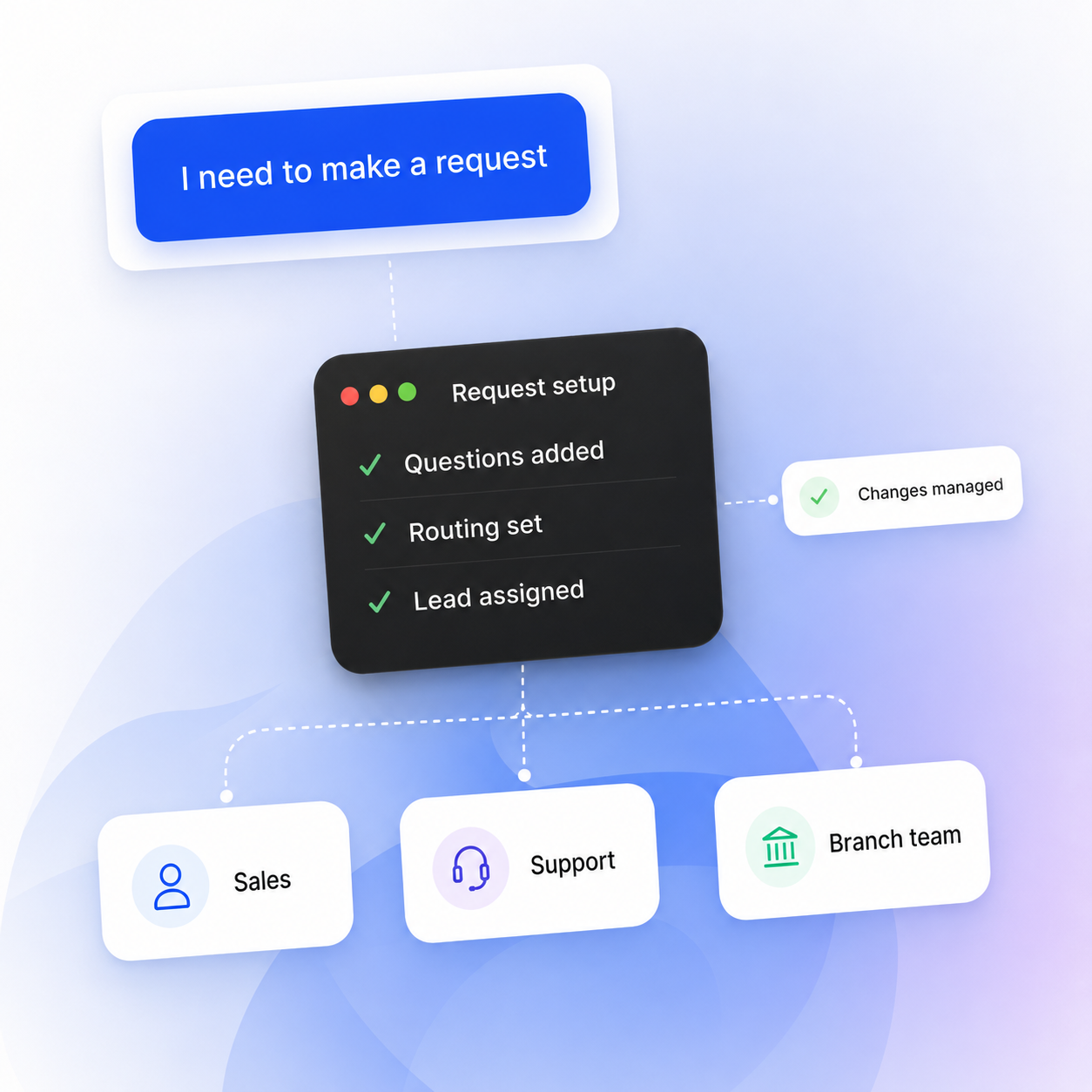
A service booking, a valuation, a parts question and a finance enquiry are different jobs, and they are routed as such.
The details you need for that request, and only those
Each request asks for what your team actually needs, one question at a time.
Your customers check the request before it reaches you
Nothing is sent until your customer has seen exactly what you will receive and agreed to it.
Details come from the customer, not from guesswork
The information in a lead is what your customer told you.
Leads land where your team already works
Email to the right recipients, with the full conversation attached, and into your CRM where we have the connection.
Requests reach the right team the first time
A service booking, a valuation, a parts question and a finance enquiry are different jobs, and they are routed as such.
When a customer asks you to do something, the conversation moves into the request that fits it, rather than collecting a general message for someone to sort out later.
A specific action goes to the specific route. Asking to book a service starts a service booking rather than a general service enquiry, and asking for a price on work starts a quotation. Broader questions, the ones that genuinely need a person, go to the right department with enough context to answer.
If it is unclear what a customer wants, they are asked, and nothing is submitted on a guess.
The details you need for that request, and only those
Each request asks for what your team actually needs, one question at a time.
Your service booking might need a registration, mileage, the branch and a preferred time. A valuation needs different details again. Each request asks for what it needs and nothing more.
Questions come one at a time, in conversation, and anything the customer has already given is reused rather than asked again. Preferred times are checked against your opening hours and how far ahead that department takes bookings, so you do not receive requests for times you cannot work with.
Some of it can be picked up from the page a customer started on, which is one fewer question for them to answer.
Your customers check the request before it reaches you
Nothing is sent until your customer has seen exactly what you will receive and agreed to it. Every request is shown back to the customer in full before it goes anywhere, and they have to confirm it. That is what keeps the lead accurate and keeps your team from working through requests the customer did not mean to send.
The details are gathered in conversation
Your customer answers a short series of questions, in their own words, rather than being handed a form. Contact details are checked as they go, so obvious mistakes and placeholder entries do not get through.

The full request is shown back
Before anything is sent, your customer sees the complete request as your team will receive it: their details, the branch, the vehicle and everything they have given. If they want to change something, the request is rebuilt and shown again.
They confirm, then it is sent
The request only goes to your team once your customer has confirmed it as a separate step. A click on a call to action, or a request that has been filled in for them, never counts as agreement on its own.
Details come from the customer, not from guesswork
The information in a lead is what your customer told you.
Required details have to come from the customer or from something your site already reliably knows. Nothing is filled in to complete a request.
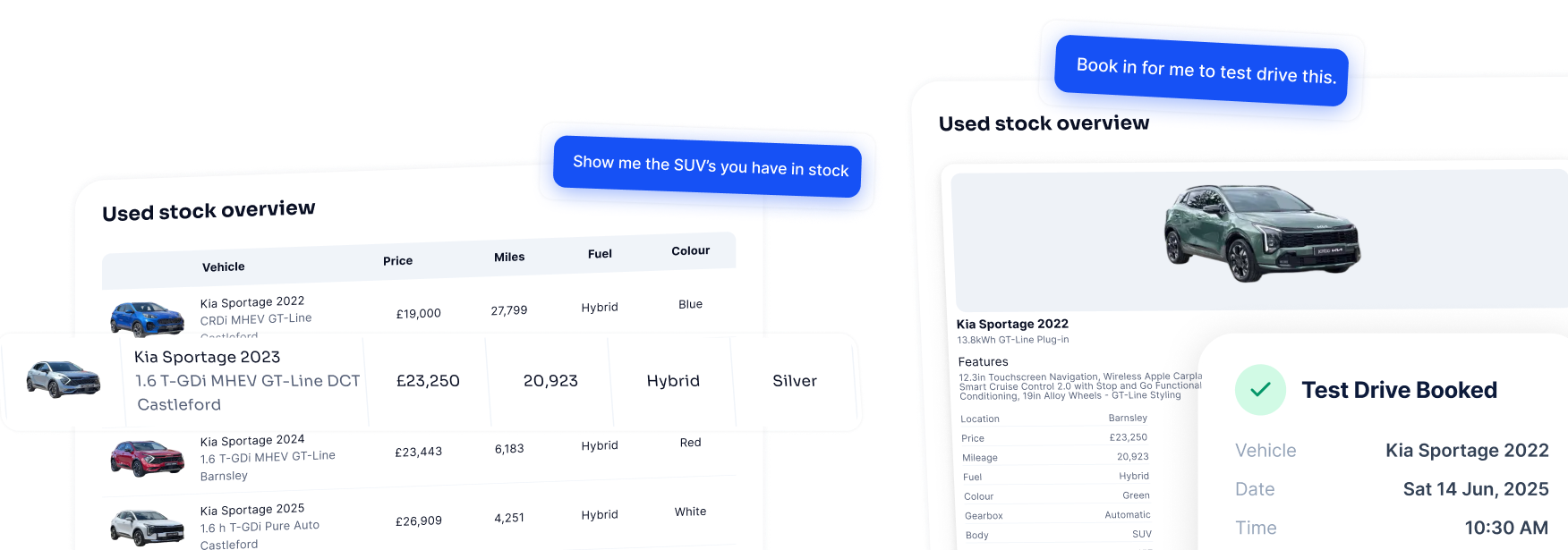
Where a customer's own vehicle is needed, its make, model and registration are confirmed with them and the mileage is theirs to give. Where a request is about a vehicle from your stock, that vehicle carries into the request so your team knows exactly which one.
If a detail is missing, your customer is asked for it. An incomplete request is not sent.
Leads land where your team already works
Email to the right recipients, with the full conversation attached, and into your CRM where we have the connection.
Confirmed requests are emailed to the recipients for that department, branch or business, with the details set out and the full conversation attached. That transcript is the part your team will use most, because it shows what the customer actually asked before they made the request.
Where your CRM can receive them, leads are forwarded there too, so they sit alongside everything else your team works from. We set up that routing with you and maintain it.
The request is a request. It reaches your team to action, and your team confirms the booking, the valuation or the answer with the customer.
Your requests, set up and managed by us
Fully done for you, including the routing, the questions and the changes you ask for later.
We build your requests around how your business runs: what you take in chat, which questions each one asks, which departments and branches they route to, and who receives them.
We also handle the changes. A new department, a different set of questions, a request that should only appear on certain pages, or a change to who gets the leads. Tell us what you need and we make it happen.
See it on your dealership website
We can show you AutoConverse running against your real vehicle stock, with your content knowledge and branding — and walk you through the other features of the platform.
See AutoConverse working on your website and vehicle stock
We’ll create a fully functioning AutoConverse demo using your website content, business information and live vehicle stock.
Experience exactly how AutoConverse could answer customer questions, recommend vehicles and generate enquiries for your business.